Wednesday, 6 June 2018

Put Power in your game

This week Field Hockey Sticks USA launched their brand new signature range of sticks called Power Curves.

These sticks are an exciting brand new brand on the market with some exciting features and technology included in each of the sticks. Lets have a look at the sticks on offer from Power Curves-


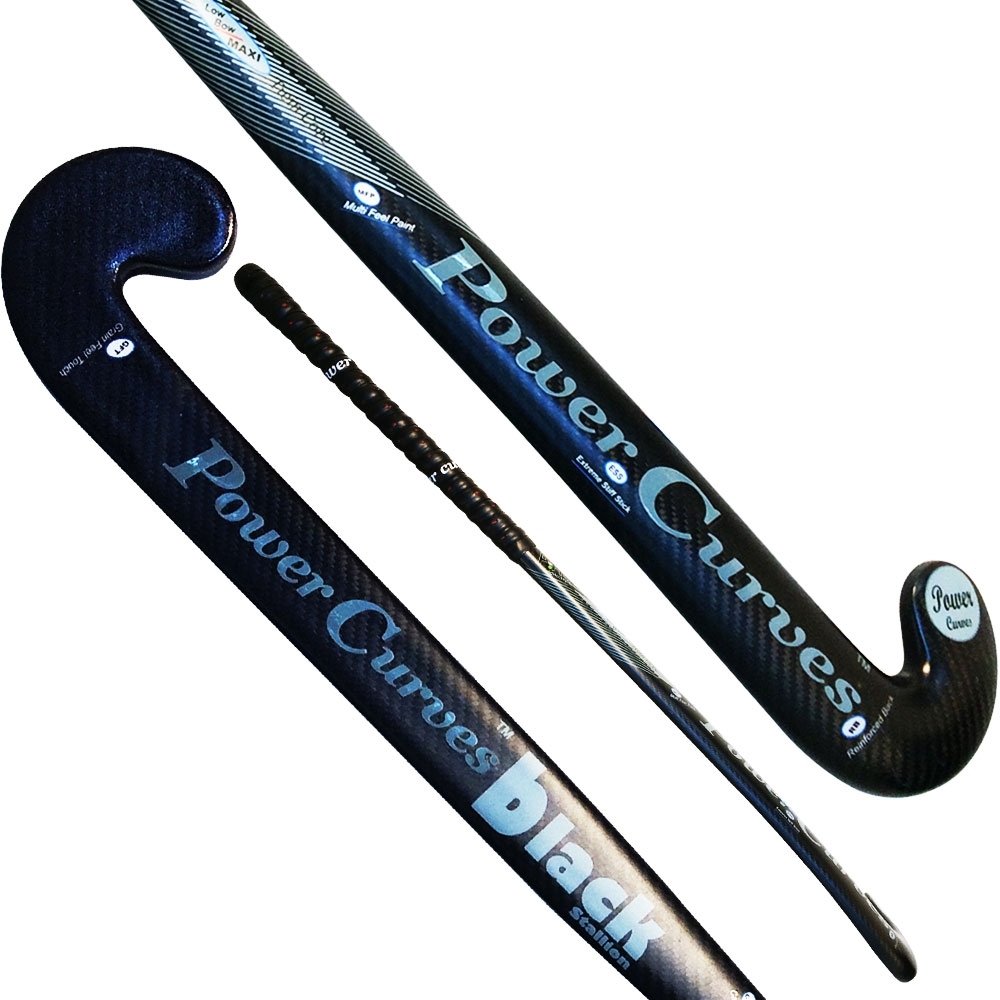
The Black Stallion is the top of the range stick from Power Curves it is a serious hockey stick for the serious player out there looking to take there game to the next level. It has a very striking full back design, and the grip is a Gel Grip designed by Power Curves which you can also buy on its own if you wish. It retails for $225 US


The Red Curve is an exciting stick with a Low Bow Extreme, its look is one that stands out with a Red Buff Grip and black and red design. This is a great stick for those out there that like to drag flick or throw overheads. It retails for around $185 US 


The Orange Coral like the Red Curve is a very nice looking stick with that outstanding orange grip and medium bow, its a stick that will help you take your game to the next level. It has a twin core construction and retails for around $165 US.


Well what can one say about the White Snow, this is a very different looking and feeling stick with that Low Bow Groove feature. This is one stick that will have you standing out on the pitch for sure and certain. It retails for around $140 US


If you are looking for a stick which gives you good features, but is cost effective the the Wonder and Wonder Junior are the sticks for you. They both have a continuous bow and nice black grip and design. They retails for around $120 US for the Senior and $85 US for the junior stick.

In addition to the outdoor sticks Power Curves have also bought out to Indoor Sticks for those looking for something different and something new for indoor hockey. Lets have a look at these.


The Purple Patch will certainly have you standing out on the indoor court with its purple colour and white grip. It has a medium bow and 80 % Carbon in and features a Reinforced Back Hand. This retails for around $105 US


The Prestige is certainly a classy indoor stick, it features Grain Feel Touch and the reinforced back hand, and a striking look with the black grip and the black, orange and lime shaft. This is one stick that will help take your indoor game up a level. It retails for around $145 US

So if you want to check out this exciting new range you must go to Field Hockey Sticks USA.

For all Australian hockey players out there who want something new stay tuned Power Curves is coming to Australia. For all those hockey players world-wide why dont you join the Power Curves Revolution.


Sunday, 15 April 2018

Taditionalist v Modernist: The battle for the future direction of Australia Hockey

The Commonwealth Games has just finished on the Gold Coast, and a very successful hockey tournament has just finished as well, but now the real battle starts its a battle between the Traditionalist who want little or know change to hockey in Australia and the Modernist who understand that if the game is to remain relevant in Australia and to start growing again, then the time for change has come.

As everyone in the hockey community across Australia knows, Hockey Australia is in the throws of creating a new format and design for the old Australian Hockey League, and this is the first front in the battle between these two factions. The traditionalist don't want things to change they want the AHL to stay the same as its always been a contest between the states and territories at one time and in one place. The modernists on the other hand realise that in order to get more money into the game to help with development and growth, this needs to change to a franchise format on a limited home and away basis.

The sticking points however seem to be over what format the actual hockey takes, the traditionalist want it to remain the traditional game with zero rule changes, where as the modernist are prepared to try new rules and ideas in order to make the game more attractive to a new fan base. The traditionalist say that this will kill hockey, see thats the problem hockey was and is all ready dying to a degree and has been for sometime, it needs to attract new fans. So I say why not meet half way on this how about the following-

- 11 players a side remains

- Franchise based teams but licenses are instead granted to state bodies and perhaps even a couple of teams in New Zealand for those bodies to sell on to groups or consortiums to bring money into hockey in those states for the purposes of development and growing the game.

- There are some rule changes put in place but the overall integrity of the game remains as it is today.

- The new competition is on a home an away limited basis similar to the way the AHL use to be in the late 90's early 2000's period.

- This new comp doesn't take the place of the AHL rather it compliments it, and the old AHL remains it just reverts back to being called the Australian National Hockey Championships (Open Age).

Now I think that is a fair compromise, which works out for the betterment of Australian hockey as a hole and it keep the traditionalist happy and also gives a nod to the modernist and shows a path to building and growing the game of hockey in Australia again.

Remember at the end of the day everyone involved in hockey today in Australia is a temporary custodian of the game, they don't own the game, they need to be passing the game on to the next generation and the generation after that in good shape.

Sunday, 5 November 2017

Hockey Equipment Review: Malik Sticks Worth a Look

In my time as a hockey coach I have seen many different brands of hockey sticks come and go, and have tried many different brands, some I have found good others not so good, but one brand of stick that I have found very good is Malik. As a brand goes Malik Hockey seems to have a stick for everyone, from the novice right the way through to the experienced top class player. Currently in Australia Malik don't seem to be a widely used brand, but they are one stick I urge players to have a look at.

One of the best websites to have a look at that offer a wide range of Malik Hockey Sticks is Field Hockey Sticks USA

Field Hockey Sticks USA which is part of the Best Soccer Buys Sporting Good Inc Group has a wide range of Malik Hockey sticks both for Outdoor and Indoor. Some of the sticks they have come under the following categories-

Malik Composite and Wood Sticks


You can check out this great range of sticks at the following link- http://www.fieldhockeysticksusa.com/field­hockey­sticks

Malik Junior Field Hockey Sticks
They also have a great Range of Junior Field Hockey Sticks-


You can check out the Junior Field Hockey Stick Range at- http://www.fieldhockeysticksusa.com/junior­field­hockey­sticks

Malik Indoor Wood Sticks
They also have a large range of quality Indoor Sticks including Indoor Wood Sticks


You can check out there range of Indoor Wood Sticks at- http://www.fieldhockeysticksusa.com/wooden­indoorhockey­sticks

An if you are looking for a top of the range Malik Hockey Stick to help take your game to the next level they have a good range of Platinum sticks-

Malik Carbon Field Hockey Stick: Platinum Curve


You can check these Platinum Sticks out at- http://www.fieldhockeysticksusa.com/field­hockey­stick­platinum­outdoor­ multi­curve­80­carbon­5­aramid­15­fiber­glass

They also have the top range of Malik Composite Hockey Sticks if you prefer a composite model to a pure carbon model-

Malik Composite Hockey Stick: Gaucho Multi-Curve


So if Malik is the brand of stick you are looking for, or you a player who is looking for a wooden stick or a model of stick that is more forgiving for your game, then I recommend that you give Field Hockey Sticks USA a look and see what they can offer you, and while you are there why not check out there other stores if you are a soccer or cricket player or know someone that is-


So do yourself a favour and check out Field Hockey Sticks USA


Sunday, 29 October 2017

Lets pledge to do better be better Sports Coaches

For a sustained period of time now, I have noticed that the standards of Sports Coaches and the way in which Sports Coaches engage there players/athletes and others in the game is slipping. I have seen a growing trend particularly within the Junior Sport's Coaching ranks where it's become more about winning and less about what it should be about which I believe is about giving everyone young person not matter their skill all ability the opportunity to succeed and have fun. I have also noticed that there appears to be a disconnect and that Sport's Coaches are struggling to engage with their player/athletes in particular in the area of mental health and well-being.

Now on the second point this I believe requires a change to how we train Sport's Coaches to many sporting bodies simple teach through accreditation and there courses, how to play the sport, they don't teach coaches how to engage, and also how to act and conduct themselves as coaches. This short fall must and need to be addressed and addressed quickly. So where do we start, well I believe it starts with us as Coaches we must pledge to do better and bet better as Coaches, we must raise the bar and demand higher standards.

Today I am launching a campaign calling on all Sports Coaches out there in Australia and across the world to join me in taking the #SportsCoachesPledge .

Step 1: Download the jpeg of the #SportsCoachesPledge below-

Step 2: Post the Pledge to your facebook, twitter, instagram or combinations of all these, with this post-

I've taken the #SportsCoachesPledge to do better and be better in my coaching, and I call on my friends in the sports coaching community to join me, <tag five sports coaching friends names here>

Step 3: Post to your facebook, twitter, instagram or combinations of all these, this poster-


Thats it a very simple campaign to do better and be better as Sports Coaches.

I also want this Pledge to become something the grows and evolves over time and gets added to by other Sports Coaches, therefore I welcome you to add your own commitments to the Pledge as it goes world-wide.

So lets together pledge to do better, bet better as Sports Coaches.

Monday, 23 October 2017

Prescription for World Field Hockey

Recently I was reading a post on Facebook which was about the fact that Zambia have been unable to raise enough funds to compete at this years African Cup of Nations in Egypt, and also we have seen what I guess you could only describe as a one-sided Oceania Cup completed in Sydney where it was always going to be a Gold Medal final played out between the two power-houses of this federation Australia and New Zealand. Well all this got me thinking that perhaps something needs to change, and that perhaps the time has come for a more equal approach to the future of the game world-wide.

Now when the Hockey Pro League was first proposed I was a strong advocate for this, but I have since started to wonder if this is indeed a good think, because what it I think is actually doing is making sure that the powerful get more powerful, while, the weaker get weaker. I am starting to think the Pro League has been designed to make sure that the strong countries remain strong and keep all the power and control in the sport. Our sport should be aiming for it to be possible for every single country who plays the game to win the World Cup and Olympics and not just a select few which seems to current be the norm.

Therefore after some further thinking, I have come up with the following prescription for the future of World Field Hockey going forward-

- Scrap the Hockey Pro League, as this has clearly divided World Hockey with some people being for it while the majority are against it.

- Keep the World League but change the structure to the following-

Round 1: Regional/Zone Qualifiers

  1. Pan America: 2 x Regional Zone Groups
    1. North/Central America/Carribean Group
    2. South America Group
  2. Africa: 2 x Regional Zone Groups
    1. Northern Africa Group
    2. Southern Africa Group
  3. Europe: 2 x European Zone Groups
    1. Western European Group
    2. Eastern European Group
  4. Asia/Oceania: 2 x Regional Zone Groups
    1. Northern Asia/Oceania Group
    2. Southern Asia/Oceania Group
Round 2: Continental Federation Qualifiers/World Cup/Olympic Qualifer
  1. Pan America Cup
  2. African Cup of Nations
  3. Asian/Oceania Cup
  4. European Championships
Round 3: World Group Phase 1- Quarter Finals
  1. World Group Q1
  2. World Group Q2
  3. World Group Q3
  4. World Group Q4
Round 4: World Group Phase 2- Semi Finals
  1. World Group S1
  2. World Group S2
World League Final

- Every country would compete right from the start of the competition no matter what there ranking is
- In terms of the number of teams per group and how many go through to the next stage, I have not worked this out, right now this is just the bare bones.
- This competition would run over a 18 month cycle roughly
- The continental federation qualifiers would also be the world cup/olympic qualifiers and 4 spots would be given to each and this is the only way to make the Olympics or World Cup.

- I would merge Asia and Oceania together.

- Introduce a rolling four year International Hockey Calender like that which other sports have produced, this will include all International games, along with windows for the Domestic league etc, so that the best players are going back and playing in the domestic competition and for there clubs etc.

- Introduce an World equalisation fund, now this will be un-popular for some but anyway to bad it has to happen. The stronger Nations would contribute to this fund so much per year. Now how this fund works etc would need to be thrashed out.

Now I am sure this will get people going and get debate happen, I hope it does.


Tuesday, 17 October 2017

Two New Game Skills Practices for Training

Here are a couple of new Game Skills Practices I have roughly designed for training, these are based on similar drills out there I have tweaked and changed them a little bit. The first is-

PINWHEEL


The purpose of the pinwheel game skills practice is to work on the players hitting and trapping on the move. The players set up in two circles in alternative lines to each other and the inside circle rotates/runs in a clockwise direction while the outside circle rotates/runs in a anti-clockwise direction. Like I say the object here is to trap the ball in the run then pass to another who is also on the run in the other circle. If the GSP is working well then know one should run into each other.

The second GSP is more of a entire training one called

Building Attack/Countering with Defence

The purpose here is to give the attackers the ability to be creative and figure out how to score and create goals, and also to help the entire team to learn how to develop strong defence and counter attacking structure and measures.

Its done in two stages-

Stage 1- The Grid Games (Players Self Umpire & Self Coach)
Stage 2- Half Court Hockey Attack v Defence Alternate


The key points here are that this is also designed for the players to become self aware, because in both stages they will self umpire and self coach, with the coach only coming in and asking questions where needed.

Also in stage 2 the games work at 10 minutes hard followed by 5 minutes rest this is designed to also work on fitness and capacity to run out games.

Enjoy

Sunday, 8 October 2017

Power shift in Australian Hockey is now complete

Today saw the completion of the Australian Hockey League for 2017 in Perth Western Australia, with the two Gold Medal Finals in both the men's and women's played between the states of Victoria and Queensland with Victoria winning both. This result today also signals that the power shift in Australian hockey is now complete, with the states of Victoria and Queensland along with New South Wales in Third now officially becoming the powerful hockey states of Australia and the engine room driving the future of the game of hockey in Australia.

Now this hasn't just happened overnight it has been on a slow burn for sometime, because its these three states along with the ACT that are working the hardest in the areas of-

- Development
- Promotion & Marketing of the Sport
- Innovation

It is these three states that have embraced the new more professional direction that is occurring in  the game in Australia the most, its is also these states and the clubs in these states that are doing the most to develop the game and grow the game through new innovations such as J-Ball, Kookaburra 8's and Hockey 5's. Victoria, Queensland and New South Wales have also put in place some of the best high performance/development programs in place anywhere in the country, with players have access to the best coaching and diversity of coaching from a very early age.

These three states, have also led the way in promotion of the game, with there top leagues being either live streamed or put on TV in some form. You now can pretty much see the Victorian Premier League and Vic League 1 game of the week streamed live each week, and this is pretty well the same in Queensland & New South Wales. Now don't get me wrong other states such as South Australia and Tasmania have followed suit in this, but its really been Victoria, Queensland and New South Wales leading the charge.

Queensland, Victoria and New South Wales now have the three largest numbers of registered hockey players in the country, they are also the three states where the greatest growth in occurring again in terms of young kids playing the game. Put all this together and this is why I am saying now that the power shift which has been happening for sometime in Australian hockey is now complete.

On the flip side of that the once great powerhouse of Australian hockey, Western Australia looks to by all the key indicators to be in the decline that I have been for telling for sometime. There was once a time when WA could boast against all those key indicators that they were the powerhouse and engine room state of the game. Well its safe to say no longer.

Can this be reversed, off course it can, but it now requires massive, sweeping, radical change to every aspect of the way the game is being run in Western Australia. All the dead wood and the baggage that the game is carrying in WA must be swept away, the time has come for new faces, radical thinkers and people that are prepared to accept and embrace that the game has changed and that the things done in the past are no longer working and its time to do new things.

But that is a post for another day, I will finish off by saying this.

The King is dead, long live the new King.


Saturday, 23 September 2017

Urge all to read: Mandurah Mail Story Link

I don't often do this on my blog but I thought this article was relevant and I wanted to share it with you.

http://www.mandurahmail.com.au/story/4943707/this-is-not-the-olympics-the-cut-throat-nature-of-modern-kids-sport/?cs=7

I believe as a Sports Coach I have a responsibility to up hold the Spirit of Sport and show the values of -

Honesty
Integrity
Passion
Professionalism
Equality & Diversity
Compassion

An also as sense of fair play and morality.

This article hear highlight for me a worrying trend I am seeing in junior sports today and a worrying trend I am seeing with Junior sports coaches where they are forgetting that there role as Junior sports coaches is to be about at the heart of it development, winning is secondary. We as sports coaches should be empowering our players both on and off the sporting field, we should be up lifting them and showing and allowing them to have fun. We shouldn't be doing things like what is referred to in this article because that is just driving young people away from sport.

I welcome thoughts and comments.

Coaching in a Grand Final & Major Tournament Finals

In Australia its September, which is that time of year which brings about finals, and in particular Grand Final or what we often refer to as that One Day in September or the Big Dance.

Leigh Mathews (Brisbane & Collingwood Australia Rules Football Coach) put it the best way, "You play throughout the season to qualify for the finals, because that is where its at."

As a Coach, I have had the opportunity to coach in grand finals and major tournament finals now on a total of 8 occasions, and its not an easy thing for a Coach because once you have done everything in the case of a Grand Final during the week with training etc, and you have made your final address to the team before they go out there, there is not really anything else you can do, the outcome is out of your hands and in the hands of the players on the ground. In some ways over the years I have actually been more nervous in minor finals that my teams have played in in order to qualify for the big dance, why you ask, because it's actually harder to qualify for a Grand Final or major tournament final that it is to play in them.

Anyway I thought I would share with you all, my approach as a Coach to a Grand Final and the week leading into it.

Well how I believe as a coach you need to approach the week leading in both for yourself and your team is to keep things as normal as possible, and allow yourself and your team to soak everything up and enjoy the moment, because they don't come along all that often. Generally I keep training as light and low key as possible mainly focussing on set plays and we will do some game simulation practice at training. After training I traditional remind my players to not do anything silly over the remaining days before the big day such as sky diving or bungee jumping, I call this my don't put yourselves in harms way talk.

After the training session, the next thing for me is I like to go out for dinner either by myself or generally with my Assistant Coaches or some friends the night before the big day, then its home to watch some sport or something on T.V before having and early night. Then we move to the day, I will generally start with a light breakfast, I tend to not eat a great deal normally some cereal or may be a bit of toast, but nothing heavier than that. Then the rest of the day really depends on what time the game is.

Now in terms of how I approach the actually Grand Final itself, well I generally like to get to the venue about 30 minutes before the players, and have a brief chat to my support team, and work through any last minute thoughts. Once the players start arriving I keep it relaxed as possible I will just let the players go about what they want to do. Once everyone settles into the rooms and we are all ready to go, then I will lead a very brief team talk, where its pretty much just going over the key points and saying, ok you know what to do, then the Captain and leadership group will speak then we head out for the warm-up.

From this point it's really over to the players to be honest, there is not much much more as a Coach I can do, the next task for myself as coach is to remain as calm as possible on the bench, I believe that this is the most crucial aspect, if you are calm then that will keep your players calm and in control no matter what the game throws at you. In a Grand Final the biggest thing to remember is to enjoy it as they don't come along that often, and that its a 50/50 chance, form throughout the season and position on the ladder counts for naught in a Grand Final.

At half time the focus again is on being calm and just going over the key points and reminder everyone to play there role, control the things that we can control and play it out right to the end.

Post game is also crucial, if you win as a Coach you want to let you hair down and celebrate with your players and share in this moment, but there is one thing I always do at the end no matter what, and that is seek out the opposition coach and shake there hand and share a few words, then I find the umpires and thank them. Once thats done its over to my players and the first person I go to is my Captain to share the moment with them, and moment that can if you win it never be taken away from you.

So in summing up I say to all Coaches keep it simple and straight forward leading into a Grand Final or major tournament final and also keep it calm and simple on the day as well, its to late to go changing things, if it wasn't working then you wouldn't have got here in the first place, so there is no need to change.

The biggest thing I say to all Coaches remember to enjoy the day and enjoy the opportunity.

Friday, 22 September 2017

Developing a Selection Guideline

One of the questions I am often asked when I travel around talking to Sports Coaches is, "What do you feel are the most important things to look for in a player when picking a team?" Well that is not and easy question to answer, because it largely depends on the team you are picking and what that team will be doing. So what I have now done is develop a set of guidelines or pointers that I look for then adjust them according to the team and the level I am selecting.

This is what I look at in general terms-

1. Are the a thinking player, do they have a sports brain if you will can the read the game, can the read the play and how far ahead of the game are they. I believe that this is the most critical requirement for any player if they don't this then the rest doesn't really matter.

2. How do the relate to the potential team-mates, coaches, and even how they relate to others such as there parents etc. Do they show respect, do they listen, do they contribute and above all else will they fit in with the team.

3. Whats there work ethic like, how hard are they prepared to work in order to succeed, are they seeking perfection and pay attention to details or are they lazy and cut corners.

4. What are their basic and key game skills like, w.ill they hold up under pressure or will they crumble

5. Do they have any special skills, can they for example in my sport of hockey drag-flick. These special skills are they valuable will the team need them or not

So as you can see I place a big focus on how a player thinks and also how a player relates to others around them, before I look at their skills, and once I turn to there skills again, I am looking at their basic skills first and foremost before I look at anything else, because I believe that substance in a player is more important than flash, and this is where allot of novice coaches and novice selectors get it wrong, they mistake flash for substance.

At the end of the day this is not a comprehensive list, its designed to be a basis from which you can form a more comprehensive selection criteria to determine a squad depending on the team you are choosing.

Thursday, 14 September 2017

Using Quotes as a Sport's Coach

As a Sports Coach, I am always on the look out for great quotes that can help lift and inspire the players and the teams I coach. Now this is not something new, Sports Coaches since the dawn of time have been doing this, whether it actually has any tangible motivation or effect on the players or the team is debatable, but that is perhaps for other to judge. I thought in this piece I would share some of my all time favourite quotes that I used and also some that I have created myself.

Herb Brooks (1980 US Olympic Ice Hockey Coach)

Herb Brooks I think brought us many classic and great quotes, now some of these are not necessary certain that he actually said it but I think they are great and I have used his quote's quiet a bit of the years-

"Great moment are born from great opportunity"

" You can't be common, because common goes know where you have to be uncommon"

" Let me start with issuing you a challenge be better than you are. Set a goal that seems unattainable and when you reach that one set another even higher"

"Hard-work beats Talent when Talent doesn't work hard"

"You were born to be a player, you are meant to be here, this moment is your"

"Risk something or forever sit with your dreams"

" The legs feed the wolf"

John Wooden (UCLA Head Basketball coach)

John Wooden I think has given many great quotes particularly in the area of leadership, and here are some of his that I think are most memorable-

"Make each day your masterpiece"

"Never mistake activity for achievement"

"Success is never final, failure is never fatal"

"Failure to prepare is preparing to fail"

"The true test of a persons character is what they do when know one is watching"

"The best competition is with myself to become the best I can be"

Ric Charlesworth (Australian Hockeyroo and Kookaburra Head Coach)

Dr Ric Charlesworth the greatest Australian sports coach of all time, perhaps the greatest ever Field Hockey Coach of all time has given us many great quotes and here are some of the most memorable one's. Ric was big on using Shakesphere

"The interesting think about coaching is you have to trouble the comfortable and comfort the troubled"

"The best performer are those that can control their emotions, make good judgements, and be calm in cauldron of competition"

" Our doubt are our traitors, and make us lose the good we oft might win be fearing to attempt."

________________________________________________________________________________

There are also many other great quotes out there from Coaches here are some that I have found over the years that I like-

"Winning is not a sometime thing its an all time thing. You don't win once in a while, you dont do things right once in a while, you do them right all the time, winning is a habit, so is losing" (Vince Lombardi)

"Most people get excited about games, but I get excited about practice because that's my classroom" (Pat Summit)

"Our emphasis is on execution not winning"

"Will you come to the edge with me, I know it can be scary, but if you come to the edge with me, we can fly together"

"The ox is slow but earth is patient" (Confucius) used by Mick Malthouse Australian Football Coach

" You are either a windshield or a bug" (Mick Malthouse)

Together
Everyone
Achieve's
More

KISS: Keep it simple and straight-forward.

_________________________________________________________________________________

Then I have also come up with some of my own like-

"Follow your dreams and your dream will be reality"

"Reach for the stars, if you miss at least you will hit the moon"

"Remember the triple C, Confidence, Control and Composure"

So what do you think, do inspiration quotes work? What are some of your favourites?


Thursday, 31 August 2017

The art of pressing in field hockey

The press as a way to defend and opposition attack in hockey has been around now for a long time, and ever since the removal of the off-side rule has become even more a vital piece of any coach and teams tactic's and strategy. However in recent years we have seen it shift from simply a defensive tactic or strategy to both a attacking and defensive tactic or  strategy. An if you watched the most recent European Field Hockey Championships, I think the great Alyson Annan Coach of the Netherland's may have just moved pressing to the next level again.

So what are the different types of basic presses in field hockey well there is-

1. Full Press
2. Half field press
3. 3/4 Field press

Each of these has its advantages and its disadvantages, and the good teams and coaches use different combinations of these basic presses, based on what the opposition might be doing. So what do I feel are three advantages and disadvantages of each of these basic presses.

Full Press: Advantages

- You can control the hole field and shut down the space out of the oppositions defence.
- You can force your opposition into the part of the field which maximises your chances to force a turnover.
- You can apply pressure to the full-backs forcing them to make a mistake on there 16 yard hits causing a turnover.

Full Press: Disadvantages

- It stretches your team opening up potential gaps across the field.
- If there is no communication from the lines behind the lines in front will potentially fail to pick up the movement of the opposition play and the balls.
- If the opposition can get in behind your front line with a good quick pass then the press will break down and you become exposed to the fast break.

_________________________________________________________________________________

Half Press Advantages

- You close down the space in a much tighter way in your defensive half of the field.
- Your teams lines are much closer together thus better for communication and making sure that all lines and space are covered.
- You can see the oppositions defensive half in-front of you and judge the potential openings for a fast break should you force a turnover.

Half Press Disadvantages

- If the front line of the half court press breaks down or moves to attack the ball to early this will more often than not force a break down of your team structure.
- It doesn't put any pressure on your opposition in there defensive half allowing them time to get control of the ball and set up there attacking play.
- It can set a negative tone for the game for your team which can be hard to break even when you successfully force a turnover.

_________________________________________________________________________________

3/4 Field Press Advantages

- The 3/4 press gives you the advantage of still being able to see the opposition area in front of you.
- This gives you the time and the change to intercept any full-back 16 yard hits that are hit straight up the field.
- It gives the front lines of the press the flexibility to pivot around and force the opposition into the areas of the field you want them to go into which maximise the chances of a turnover.

3/4 Field Press Disadvantages

- Again it stretches your team and means you may not be able to close the space down across the hole field.
- It allows the opposition the ability to get our of there defensive 25 without any real pressure on them, and allows them the room to switch the play.
- If the front line break down then it will expose you to a fast break.

_________________________________________________________________________________

Pressing like any other tactic or strategy used has its draw-backs and its risks, so as a Hockey Coach what do I think is the best pressing approach, well I think you need to have a combination of everything to be successful. You need to be able to read what your opposition is doing where their weaknesses are and then apply a press that best suits that.

I personally use a very very aggressive press which is designed to force the play, force the opposition, cause confusion in the opposition and lead to turn-over after turn-over and eventually the entire break down of the oppositions structure. Now this is what most of my teams use the majority of the time-


Now this is like I say very aggressive, and its not something that every single team could execute as it requires two key things-

1. High level of fitness
2. High level of skill, patience and procision

The idea with this press is that you are happy to let the defence have the back pass that is fine, and the front line or up-side down mushroom cap as it has been coined by a couple of my teams, is there two place doubt in the mind of the defence and jump on anything shaky or poorly executed from the opposition.

As I always say as I take my teams through this, this press is high risk yes, but there is massively high reward if you get it right. Over the time I have been using this I have watched teams-

- Hit the ball over the side-lines and face our attack rather than try to break it up.
- Hit the ball over the back-line and face a penalty corner again rather than try to break out of it.

I have on countless occasions watched opposition defence lose there confidence and change there minds mid hit, and my teams on many occasions have pinned the opposition right back into there defensive 25.

With this press that is when as a Coach you know it is really working.

An while I cant lay claim to come up with this press in its original form, that rest with a good friend of mine and Coach from Victoria Mitch Dickin, I can say that I have further developed and tweaked it and continue to do so. I do believe its the next Quantum leap in field hockey pressing at International level, and hope one day I will be able to put it to work at that level.

Check out the all new Coach Emorej website

Today I launch the Coach Emorej website, here is the link below why don't you check it out-

https://coachemorejemorej.wixsite.com/coachemorej


Tuesday, 15 August 2017

Time for the next Quantum Leap

Currently, at International level, we have the Belgium men's team playing a fluid, fast, highly skilled style of play which requires a high level of precision, then we have the Argentina Men's team who rely on their Penalty Corner battery to get the job done for them, so as a result, they have taken the traditional counter attack style and for want of a better word super sized it. Then in the women's game, we have Great Britain/England playing an evolution of the Australian Men's style which was to attack hard and attack through the top of circle, and the Netherlands under the great Alysson Annan who are playing very much an evolution of the traditional Dutch style with a dash of the Australian influence which comes from Alysson.

But none of these current styles of play from the best teams in the world is a quantum leap in the game, like what the Australian Kookaburras did back at the 2014 World Cup. It is my strong view that we are still yet to see the next quantum leap in the game at International level, and this is because of a couple of reasons-

1. Coaches at international level are yet to come to terms with how to play hockey with quarters.

2. Coaches at international level have not yet learned how to use the rotation's off the bench under the quarter's format.

3. Coaches at international level have not yet really understood the value of the rule which allows teams to pull their goal-keeper.

4. Coaches at international level in today's game are perhaps too risk averse, and unwilling to go for the win, instead settling for the draw, or relying to much on penalty corners to get the job done.

5. Coaches at international level today are perhaps not creative enough, again perhaps they are afraid to get to far ahead of the curve, unlike the great Dr. Ric Charlesworth.

6. Coaches at international level are perhaps losing too much control over the direction of their teams by handing over to much responsibility to Assistant Coaches and support staff.

So with all this in mind, what will I do differently when the opportunity comes at International level in the future?

Well without giving away game style, strategy and tactics I would want to do some of the following-

- Develop a style of play more suited to quarters, perhaps look at ideas from other sports that could apply to hockey.

- I would look to better use my rotations as I have said previously I would look to up those rotations and do it through a different method.

- I would consider pulling my goalie in a more strategic way.

- I would take risks and be willing to go for the win. I have long believed that I would rather lose the game in order to win, and this won't change at international level.

- I would be creative, again looking all the time at other sports for different ways to do things and to play.

- I would be far more hands on with everything, and I would bring my player empowerment model of coaching to international level, creating a consensus approach with everyone buying into what we are all trying to achieve.

I strongly believe the next quantum leap at International level with this great game of hockey, must be with a fast, free-flowing, fluid, bold, creative constantly evolving style of play, with everyone willing to take risks in order to win.


Tuesday, 8 August 2017

T.E.A.M must be at the Heart of the Team

T.E.A.M must be and needs to be at the heart of every single Team if it's not then I can with a fair degree of certainty guarantee that that Team will fail.

So what does T.E.A.M stand for, well in a nut shell its-

Together
Everyone
Achieves
More

Expanding on this it is a set of principles and rules which are basically-

- The good of the team must always come first, an individual while valuable is not greater than the Team and should always make decisions in consultation with the Team and in the best interests of the team both on and off the field.

- Team goals and must be made collectively and then each individual's goals must mirror up with and complement the team goals.

- Team achievements should at all times mean more than individual achievements within the team. While those individual achievements are important they are never as important as the Team achievements.

In the end that famous saying that there is no I in Team but there is an M and an E is very correct.

Wednesday, 2 August 2017

Future Direction of Coaching 2: Value of alternative forms of hockey etc

Just recently my Dad watched the Belgium National Men's Team compete at the World League in South Africa and was in aww, how well they played and how efficient they were in moving the ball from one end of the pitch to the other, also how silky smooth they were in the skills department, and he asked me why is this. I answered with this simple answer they play allot of Indoor Hockey which does help with skills and ball movement.

Now Belgium is not the only country that does this, Germany, Netherlands and most of the European countries also do this, as does the United States, and this is why it is my belief that their players skill base is much more superior than Australia. For a long time, Belgium, Germany and the Netherlands also embraced small sided and modified versions of the game for juniors, so that juniors could get a better handle on the game before they moved to full field 11 on 11. In simple terms, the Belgium, Germany, and Netherlands have a system and a curriculum in place which lays out from year to year the skills that young players should be acquiring as they move through the ages.

Don't get me wrong Australia has had a few goes at this over the years, and it's sort of taken off for a while then died a slow death again, however in recent years we are seeing more and more effort by Hockey Australia, and the Eastern States to embrace the change of having more indoor, more modified versions of the game and a system and curriculum for the sport.

I am now convinced more than ever know that indoor hockey must be embraced by all nations, not only as a version of the game to play, but a version of the game that will help to improve the skills of the young players coming through, if they want to stay with and compete with the Belgium's and Germany's of this world.

Sunday, 23 July 2017

Book Review: The Hockey-Kids The Adventure begins by Sabine Hahn

For a while now, I have been wondering why there are no books for children's books on the sport I am most passionate about, hockey. For a long time now we have seen children's books in Australia which cover the sports of AFL, NRL, Netball, and cricket but nothing on hockey, well until now.

I want to introduce you to a great little book it is the first in the series written by a fantastic author from Germany Sabine Hahn, check out her website-

www.sabinehahn.net

The book is called "The Hockey-Kids: The Adventure begins," by Sabine Hahn and its a great little read for all the young hockey superstars out there. The story is about three friends, Lena, Max, and Lars and their adventures on and off the hockey field, as their new hockey team comes together despite many setbacks.


This is the first in a series of books on hockey by Sabine, and like I say its well worth the read and would make a great little gift for your budding hockey superstar out there.

If you are interested in getting a copy you can purchase it online through-

https://www.bookdepository.com/Hockey-Kids-Sabine-Hahn/9783981797077

http://www.moncoq-edition.com/English/

You can also check out Sabine and the book through Facebook-

www.facebook.com/diehockeykids

I urge everyone to do themselves a favor and get a copy to read.

Thursday, 13 July 2017

Future Hockey Coaching Direction: Part 1

Since the introduction of quarters to International level hockey in 2015, I have felt that know one coach has really found a way to harness this to its full potential and maximize the benefits for their team over all the others.

Before the introduction of quarters we saw the Australian Kookaburras Men's team transform the game with a fast, free flowing running, attack through the top of the circle game which was built on momentum, but once quarters were introduced the Australian coaching staff, in my opinion, failed to adjust this plan and as a result they slipped out of the medal in Rio two years after their triumphant World Cup. Why did this happen, in part it was quarters hockey, it changes that game of momentum hockey as there are breaks which stop the momentum of teams.

So what am I thinking, well I believe the key is your rotations, I don't think anyone has really used the rotations in a way that works well, the closest I have seen to anyone doing this wasn't even at International level, it was in Hobart in 2016 at the Australian Women's Masters when WA Over 40's seemed to be doing something very different with their bench running rotations at a constant rate through the midfield, this seemed to allow them to keep the momentum from quarter to quarter much better.

So my thoughts are that you virtually carry only midfielders, and forwards on your bench and constant rotate every quarter at high levels through this lines, and try to create a sense in the opposition of being overwhelmed and allow for fresh legs late in the final quarter which will allow your team to have the momentum when it counts.


Standing for something

Ok so this blog post is going to be just a smidge different, it's going to be in a sense a little bit of perhaps what you would call a rant, and I apologize in advance to my regular readers, but I feel its time this was said about certain people in the sport of hockey a sport I am very passionate and proud to be a part of.

Ok so what I want to say, is I am someone who prides myself on saying what I mean and speaking my mind on issues that are and have affected our game, and I do this out in the open and I never ever hide behind a fake name, or persona in order to do this.

Now I know there are allot of others involved in my sport of hockey who do just that use persona's and hide behind fake names on forums etc, to give an opinion, and in my personal opinion I think that lacks courage. I know these people will say they do that so they can give an honest opinion, well how is hiding behind a persona or fake name and giving your opinion really all that honest, like I say I think it lacks courage, if you are passionate about the sport of hockey as you say and your concerned about the direction of the sport then why do you not have the courage to voice that opinion with your real name behind.

Look I understand that's how you feel you need to do it and that's perfectly fine, but don't then try to claim the high moral ground in doing it, because in my view it's a way to give a cheap shot and it's an easy snipe. Know one in any walk of life should be afraid of criticism and if you have to hide are you showing real courage like you say or is it actually that you lack the courage to be up front.

Anyway, that's my thoughts, I know this I won't change I will continue to speak my mind and tell it like it is and I will continue to offer my opinions and back it up by putting my own name on it.

JEROME BUCK


Thursday, 29 June 2017

New Hockey Trophy: World 9's Challenge

A few post back I talked about a new hockey trophy played over three formats of the game on one weekend.

Well in this post I am putting forward another idea for a new competition called the-

World 9's Challenge

We will take the 9's format that was used a few years ago in Australia as part of the International Super Series. The teams competing in this new competition would be all-star teams as per below-

1. Asian Hockey Federation All-stars
2. Pan America Hockey Federation All-stars
3. Oceania Hockey Federation All-stars
4. African Hockey Federation All-stars
5. European Hockey Federation All-stars
6. World All-stars

Now could this concept work? Where would it fit into the hockey schedule? Would the best players want to participate in it?